Q&A: Fluid Organisational Structures were Used to Propagate Religious Hate
- Bhaskar Gautam, Biken K Dawadi | 2026-08-03Political scientist and commentator Bhaskar Gautam says the rapid creation and dissolution of religious groups, a tactic likely learned from contemporary Indian practices, makes it difficult to track their affiliations and funding.
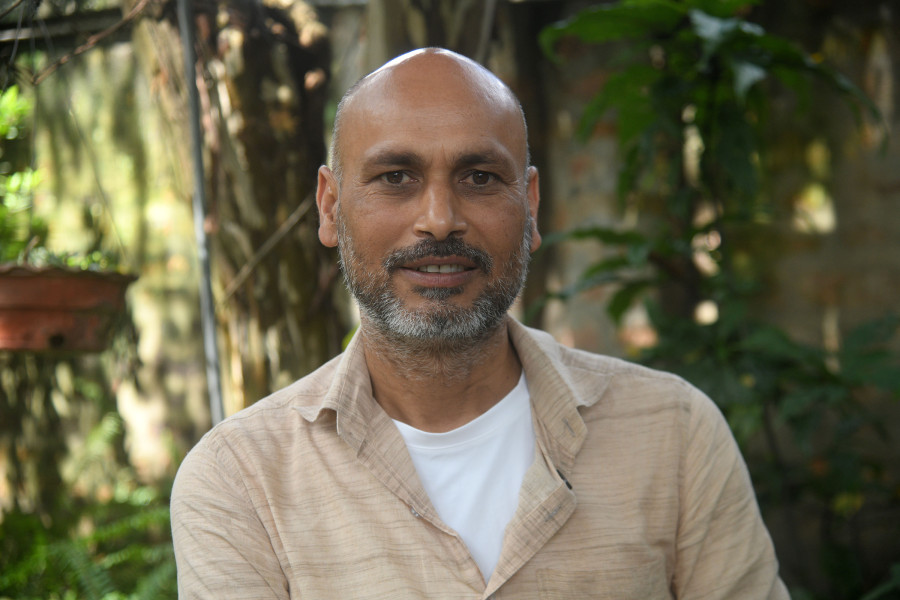
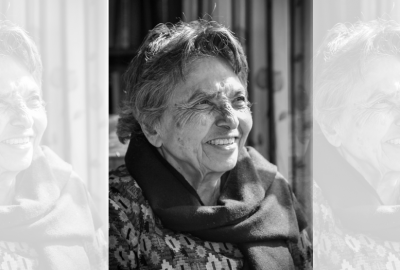
Bhaskar Gautam, political scientist and commentator Deepak KC/TKP
In the wake of social unrest in the Tarai-Madhesh region, triggered by a communal clash in Devanganj, Sunsari on July 26, Nepal finds itself grappling with a recurring vulnerability to communal friction along religious lines. While authorities have routinely leaned on coercive force to quell violence, critics argue that such reactive measures fail to address the deeper, systemic undercurrents fueling the crisis.
The Post’s Biken K Dawadi sat down with political scientist and commentator Bhaskar Gautam to dissect the complex historical and socio-political roots of these tensions. Gautam offers a critical perspective on how decades of secular popular mobilisation have historically contrasted with a Hinduised state structure, and how external religious networks and fluid digital campaigns continue to exploit socio-economic vulnerabilities. The conversation probes the state’s governing mentality, the limits of police and security sector reforms, and the urgent necessity for transparent institutional dialogue to preserve social harmony.
How did the communal tensions within the Tarai-Madhesh region of Nepal evolve over time?
In the specific case of Nepal, and the Tarai-Madhesh belt in particular, the background of communal riots must be understood through several distinct contexts. If we compare our situation to India at a political level, the first point of note is that the historical nature of political mobilisation in Nepal has been a secular space. Since the 1950 revolution, modern Nepali politics was mobilised—perhaps by design or perhaps by coincidence—in a manner that was fundamentally different from the Indian experience.
In what sense?
Both BP Koirala and Pushpa Lal Shrestha established a foundation for political mobilisation that was entirely distinct from India’s, as it lacked a religious component. Consequently, from its inception, whether through party politics or modern forms of collective action, Nepal operated within a secular space. In many ways, I believe this is a lesson that Nepal could even teach India. However, while our political mobilisation was secular, we must acknowledge that the state itself was not. If we examine the state as an entity, it remains a Hinduised structure. This creates a core tension in our seventy years of democratic imagination: Secular mobilisation has consistently stood in opposition to a Hinduised state structure, yet many observers frequently conflate these two distinct elements when discussing the politics of religion in Nepal.
Until what point did this secular form of popular mobilisation remain the dominant force in Nepali society?
This secular form of popular mobilisation remained the primary mode of engagement in Nepal nearly up until the promulgation of the 2015 Constitution. I maintain this distinction between the secular nature of popular movements and the non-secular nature of the state. It was only after the constitution was established that we saw significant shifts, notably when KP Sharma Oli attempted to instrumentalise religion for political mobilisation. Although his initial attempts were largely unsuccessful due to the specific context of the time, the efforts to move in that direction were clearly present. In the decade since then, the expansion of religious influence within society has become widespread.
What were the early signals of religious influence entering the Nepali political landscape from external sources?
If we discuss the politics of religion, which is inextricably linked to current communal tensions, we can trace a thread back to the period following the assassination of Mahatma Gandhi by Nathuram Godse. When the Rashtriya Swayamsevak Sangh (RSS) was briefly banned in India, they looked outward to expand their activities, and Nepal was part of that first phase of expansion. During the 1950s and 60s, many teachers arrived from India to work in Nepal, and some were involved in expanding RSS activities. The first recorded religious riot in Nepal occurred in Nepalgunj around 1951, involving individuals whom the Nepali government eventually extradited at the request of the Indian government.
How did the activities of the RSS evolve during the subsequent decades leading up to the restoration of democracy in 1990?
From the early 1950s until roughly 1991, the activities of the RSS operated informally under various guises, often led by Indian nationals. This period entered a new phase after King Mahendra took absolute power, as the informal expansion within society became easier and, in some ways, did not require overt public justification. It was only after 1991 that the politics of the RSS took a formal and institutional path in Nepal through the World Hindu Federation. Their methodology followed an established template: Operating through schools, targeting young and impressionable children through their branches, and specifically recruiting talented but economically disadvantaged individuals into a lifelong commitment to the organisation.
Where was the initial focal point for this educational and religious expansion within Nepal?
The first centre for the expansion of these educational and religious activities was the Dhading district, where substantial work was conducted before the movement spread elsewhere. However, over the last decade, we have observed a shift that mirrors developments in India, particularly following the rise of Narendra Modi after the 2002 Godhra incident. We can categorise this into two phases: 2002 to 2014, and the period after 2014. Since 2014, with the BJP in power in India, the RSS has been able to operate freely with massive state resource mobilisation, which has led to a significant expansion of similar activities and networks within Nepal, facilitated by the presence of a Hindu-centric power structure across the border.
What specific events in recent years served as a catalyst for the heightening of communal sensitivities in Nepal?
The Covid-19 pandemic served as a major triggering event in Nepal. During this time, there were attempts to exploit Hindu-Muslim tensions, particularly in Saptari. This manifested through two primary contexts: Tensions surrounding migrants returning from India to quarantine centres and friction with the administration regarding Muslims performing communal prayers. This period saw a significant expansion of hate politics via social media, which has continued to spread in various forms. A notable trend in the last decade is the use of fluid organisational structures. Instead of one static organisation, various groups are formed for specific purposes and then dissolved or rebranded as needed.
Deepak KC/TKP
Could you elaborate on the strategic reasons behind this constant formation and dissolution of various groups?
This is a strategic choice. While the core actors often remain the same, they emerge under new banners—some focused on sanitation, others on temple construction, and others, particularly in Madhesh, on river conservation campaigns. However, the rhetoric used by these groups is invariably tied to religious and cultural identity. This rapid creation and dissolution of groups, a tactic likely learned from contemporary Indian practices, makes it difficult for researchers or journalists to track their affiliations and funding. Furthermore, during periods of political transition or regime change, dissatisfied political forces often use these long-standing communal triggers to disrupt the peace process or influence the political course, as seen during the 2006 Nepalgunj riots involving pro-monarchy groups.
How would you evaluate the government’s seriousness in addressing these underlying communal currents?
The government’s level of seriousness is a critical question, especially since intelligence assessments reportedly warned three years ago that expanding religious activities could lead to riots. These tensions are an undercurrent with multiple dimensions. We see a pattern where organisations like the Hindu Samrat Sena appear, benefiting from a fragmented structure that allows them to evade scrutiny while maintaining institutional and individual links. Some of these groups, including digital platforms like Men’s Room Reloaded (MRR), have ties to the current power structure. But their ties with Hindu extremist organisations invite scrutiny. But they need to be researched before we reach any conclusion. Questions have been raised regarding the connections between individuals close to the leadership and external political entities, which warrant official investigation.
What does the current administration’s approach to these issues reveal about its broader governing philosophy?
The current government’s mentality is characterised by systemic targeting and selective prosecution. This is evident in how they have handled various incidents and even in their approach to anti-corruption efforts. The administration appears to operate with a ‘command’ mentality, which is essentially an authoritarian or dictatorial tendency. Such a mindset negates the space for democratic communication and dialogue, favouring prosecution and punishment instead. This is dangerous because it shifts the state’s reliance toward the massive and indiscriminate use of force, which in turn encourages their networks to celebrate violence as a form of social punishment. We see this religious underpinning even in the reproduction of values within these networks, such as the Bhajan Mandali campaigns, which reflect a dangerous trend of merging religious zeal with state-sanctioned coercion.
Is there evidence to support the claim that the Police are disproportionately brutal when operating in the Madhesh region?
When a government institutionalises selective targeting, it fosters impunity rather than the rule of law. Nepal has a long historical legacy of impunity that successive governments have failed to undo. In this context, the police do not operate in a vacuum. If a government flourishes on impunity, the institution of the police cannot be expected to function effectively or fairly. Historically, the Nepal Police have been quick to use lethal force in protests across the country, not just in Madhesh—this is evident in the deaths of 19 youths during protests around the capital during the first day of Gen Z protests. This indicates a systemic failure in decades of police reforms and a tendency for ruling parties to treat the police as a tool for political interest rather than a professional, humanised institution.
What role have international donors and foreign aid played in the success or failure of these security sector reforms?
International actors are also complicit in this failure. During Nepal’s conflict years, there was massive foreign investment aimed at reforming security institutions and meeting basic human rights values. For example, significant funding for police reform came from the UK’s DFID (now FCDO), yet the lack of fundamental reform has been raised even in the British Parliament. The evidence from every protest—whether in Tikapur, the Madhesh, or Karnali—shows that these reforms did not lead to a more democratic or sensitive security apparatus. Instead, we see an institutionalised insensitivity that becomes even more blatant and serious when targeting marginalised communities.
How concerning is the apparent involvement of former high-ranking security officials with external organisations that have a religious-political agenda?
The involvement of retired generals and police officials with organisations like the RSS or HSS is a significant dimension of the problem. To understand how this works, we can draw parallels with India, where the RSS operates based on four pillars: strong organisational mobilisation, a clear ‘enemy’ for hate politics, a core ideological orientation, and the mobilisation of power and resources. In Nepal, we see variations of this model where state resources are mobilised for right-wing Hindu politics. This includes strategic access to the power corridors for land acquisition—as seen with various religious outfits—and the recruitment of retired security personnel who possess the tactical knowledge required to manage or manipulate community-level violence.
How do you view the state’s intervention in the communal clashes in Tarai-Madhesh?
I do not believe the delay was necessarily a coordinated plan, but rather a result of a governing mentality that prioritises coercive measures and punishment over dialogue and coordination. This administration’s orientation does not leave it mentally open to immediate crisis management through democratic exchange. There is also a profound distrust between the high-level executive and the institutions they lead, resulting in a situation where leaders feel they must do everything themselves or only through a trusted inner circle. This undermines the autonomous functioning of institutions and leads to parallel, uncoordinated activities during a crisis.
How has this lack of institutional autonomy affected the performance of administrators and police officers on the ground?
Except in cases where a Chief District Officer (CDO) or police chief is exceptionally confident based on their own experience and personality, most local officials hesitate to act without orders from above. While they have the constitutional and institutional space to initiate coordination and de-escalate situations, the system is not built to encourage such discretion. Consequently, they wait for orders, often only receiving them when the situation has already spiralled. When the leadership at the top is more concerned with internal competition than coordination, the response on the ground is bound to be weak.
How do you account for the discrepancy between the reformist election agendas of the ruling RSP and their actions once they attained power?
This is a structural and institutional issue rather than a purely individual one. Once in power, parties often inherit a cultural fabric that values coercion and consolidated traditionalism over democratic strengthening. Furthermore, there is a fundamental flaw in the official understanding of ‘development’ in Nepal, which has historically relied on a trickle-down model and the coercive use of force, leading to displacement and urban slums. Many in government suffer from a form of historical amnesia and ignorance regarding these domestic and international constraints. This ignorance is often masked by individual arrogance—the belief that a few individuals can ‘save’ the country—which systematically undermines the very institutions needed to achieve long-term goals.
What is the relationship between poverty, governance, and the rapid spread of communal triggers in certain areas?
Communal triggers spread most rapidly in areas where poverty is high, superstition is prevalent, and intermediate social institutions are weak. This is directly connected to unemployment, corruption and bad governance. Without institutionalising the rule of law, corruption-free governance is impossible, as impunity can never lead to good governance. Because the government remains largely incompetent and institutions are not in place, state resources are often misused, hindering the path toward a more just and equal society.
In his recent address, the PM appealed to civil society to help maintain peace. Does this suggest a shift in the administration’s stance?
While the PM’s appeal to political parties, civil society and religious leaders to establish peace acknowledges that security cannot be achieved through force alone, this creates a paradox. A government cannot effectively appeal to the ‘associational life’ of a society while simultaneously placing restrictions on press freedom and unions. Furthermore, there is a tendency to blame all of Nepal’s current ills on the post-1990 period, which ignores why the 1990 movement was necessary in the first place. By branding everyone active in politics over the last 35 years as enemies, the government finds itself in the awkward position of now needing the help of those very ‘enemies’ to maintain social harmony.
Given the geopolitical sensitivities and the open border with India, what special measures should be considered for the Madhesh region?
Because these religious tensions are directly connected to developments in India, we cannot rely solely on traditional nationalist rhetoric. We must think about cross-border dialogue that cannot be simply controlled or shut down. We also need to learn from the past. For example, the most effective investigation into the 2006 Nepalgunj riots was an independent commission formed by citizens, not the government. We must empower regional hubs, like Biratnagar or Janakpur, to conduct their own autonomous investigations into communal incidents rather than waiting for Kathmandu to act.
Finally, what role does education play in mitigating these communal tensions?
Education is necessary, but we must note that current communal incidents are primarily occurring in urban or transitional spaces, not in villages. In villages, trust networks are stronger and external mobilisers are more easily tracked. The urban nature of these clashes suggests they are driven by organised actors who exploit semi-educated or semi-literate populations. To counter this, we need informed and critical citizens who can respond immediately to a crisis by opening dialogues with local administrations rather than waiting for the state. If we can foster this proactive spirit and invest in democratic values within the religious sector, we can create a more vibrant and resilient democratic life that does not depend solely on government appointments or official reports.
3 August 2026
Source: https://kathmandupost.com/interviews/2026/08/03/q-a-fluid-organisational-structures-were-used-to-propagate-religious-hate
About the Author
 Bhaskar Gautam
Independent Researcher
More Blogs